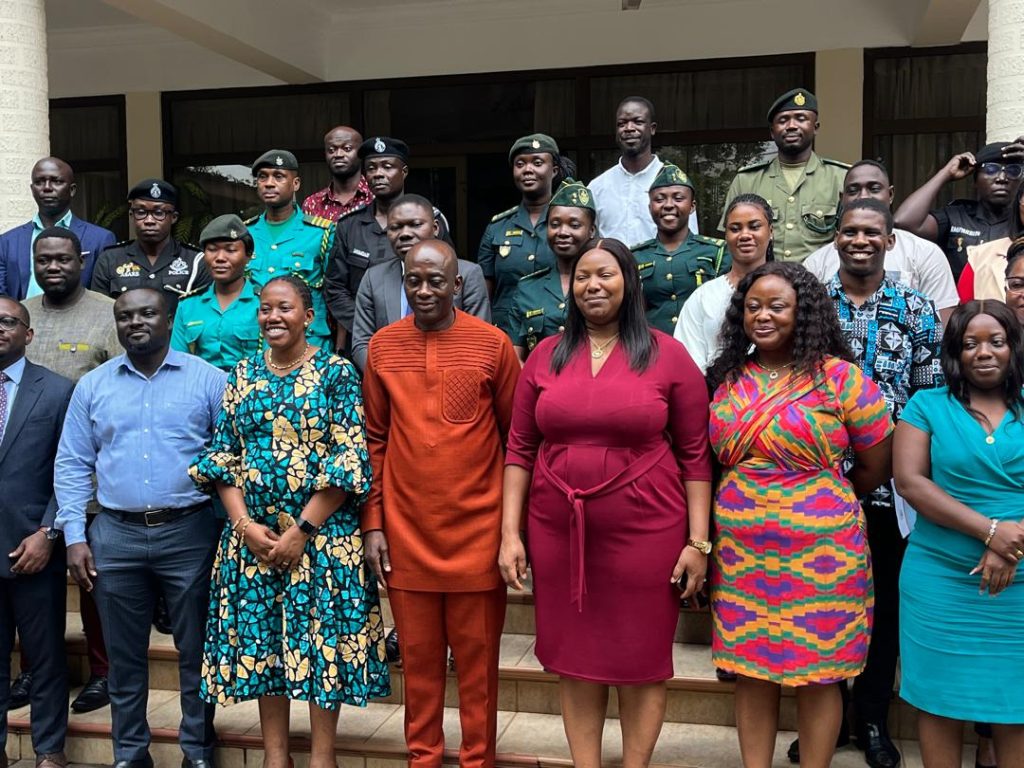
The Minister for Gender, Children and Social Protection, Hon. Agnes Naa Momo Lartey, has reaffirmed the government’s unwavering commitment to the global fight against human trafficking and irregular migration, pledging stronger cooperation and support for law enforcement and stakeholders.
Speaking on the Minister’s behalf at a two-day capacity-building workshop for law enforcement officers, Madam Annorbea Asare, Director of the Ministry’s Anti-Human Trafficking Secretariat, described human trafficking as one of the most pervasive and destructive crimes of our time, often hidden in plain sight and deeply linked to irregular migration.
She emphasized the crucial role of law enforcement in detecting and addressing trafficking, noting that the training was designed to equip officers with the skills, tools, and sensitivity needed to identify trafficking indicators, dismantle criminal networks, and protect the rights and dignity of victims. The workshop also promoted collaboration among police officers, immigration officials, prosecutors, social service providers, and international partners.
The initiative aligns with the 2024 World Day Against Trafficking in Persons theme, which underscores the need for stronger partnerships, greater awareness, and the removal of barriers that hinder the identification, protection, and access to justice for victims.
Madam Asare also outlined the Ministry’s key achievements in the ongoing fight against human trafficking, describing the crime as a pressing national and global concern that demands continued vigilance and joint action.
Also addressing the workshop, DSP William Ayaregah, Director of the Anti-Human Trafficking Unit (AHTU) of the CID, who represented the Director-General of the Ghana Police Service, reaffirmed the Police Service’s commitment to strictly enforcing the Human Trafficking Act (Act 694).
He explained that the establishment of the AHTU was a direct result of the legislation, with the unit now operating a national office on the 5th floor of the CID Headquarters, supported by regional offices and designated desk officers across the country, all tasked with handling trafficking-related cases.