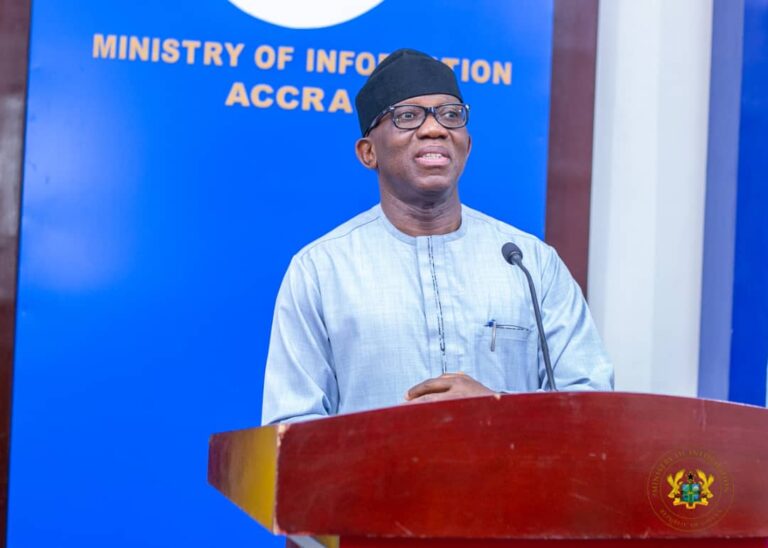
The Attorney General and Minister of Justice, Godfred Yeboah Dame, has called on top global actors in the fight against cross-border economic and financial crimes to step up cooperation efforts in order to root out the growing global phenomenon.
Speaking at the event, which draws leading figures on fighting economic crime from around the world, Mr. Dame called on top global actors in the fight against cross-border economic and financial crimes to step up cooperation in order to root out the growing global phenomenon.
With global trends pointing to the fact that organised financial and economic crimes are on the increase, Godfred Dame noted that the end game of prosecution of crime is to identify and trace the assets of criminals obtained from illicit activity.

Collaboration
He stated that the survival of the global community is dependent on how effectively it can foster collaboration between its justice partners to combat the menace and how the sources of income of criminals can be disrupted.
Mr. Yeboah Dame made these remarks in his keynote address at the 41st Cambridge International Symposium on Economic Crime at the Jesus College, University of Cambridge, United Kingdom (UK), on Monday, September 2, 2024, under the theme; “Suspect Assets.”
The Attorney General observed that “whilst tracing of assets is largely international and multi-jurisdictional, we must bear in mind the peculiarities of asset tracing and fighting economic crime generally within the context of specific continents and regions.”

On the African experience with regional integration, Dame said, “presents further complexities for the effort to curb illicit transfer of funds and concealment of assets.”
“In Africa, the launch of the Africa Continental Free Trade Area (AfCTA), whilst presenting Africa with its greatest opportunity to show to the world the strength of its potential and the entrepreneurial spirit of the people, has unleashed a new set of issues of concern to law enforcement authorities.
“These take the form of migratory problems, how to deal with the phenomenon of corruption within the context of the African Continental Free Trade Area, money laundering, and environmental challenges. The need to ramp up international cooperation in confronting financial and economic crime can not be overstated,” he said.
“Many African countries are signatories to international conventions such as the United Nations Convention Against Corruption (UNCAC) and the African Union Convention on Preventing and Combating Corruption. These agreements must be deployed to facilitate cross-border cooperation in assets recovery.
“Our survival as a global community depends on the efficiency of cooperation among us. The world can develop a proper response to the dangers posed by economic crime only through a coordinated effort based on mutual cooperation between criminal justice partners and the private sector globally,” the Attorney General added.
Recovering illicit wealth
Touching on the theme for the Symposium, the Attorney General said, when he reflects on theme of the conference, the importance of the forum as a solid platform for strengthening global co-operation among top actors in the campaign against economic crime in countries rich and poor, developed and underdeveloped, investor and recipient of foreign direct investment, comes to the fore.
“The motivation for financial and economic crime, often, is the acquisition of illicit wealth and the securing of undue advantage. Thus, effectively tracing assets of suspects and recovering the proceeds of crime nips the motive for such crimes in the bud.
“Asset tracing is therefore the end game, in my view, in dealing with economic and financial crime. Apart from being simply unconscionable for perpetrators of economic crime to conceal or keep the fruits of their crimes, for the relatively less developed world such as Ghana, the phenomenon breeds mistrust in the system and denies the nation much needed revenue for the execution of lofty development projects, Godfred Dame remarked.
Abusing Plea-bargaining
Plea-bargaining as a means to combating financial and economic crime, according to the Attorney General, is a welcome development. However, Mr Dame warned that where prosecutors are “motivated by the sole objective of recovering supposed proceeds of crime in a situation where the accused persons plainly refuse to admit responsibility for the commission of those crimes, is an unwanted paradox inimical to the rationale for the existence of criminal laws.”
“The prosecutors will face a real risk of sacrificing their reputation and creating a false impression of having compromised their professional integrity and duty to prove the commission of an offence on the altar of making money for the State, or providing a shield from prosecution to accused persons. A delicate balance, therefore, ought to be struck.
“In my respectful view, therefore, plea bargaining should as much as possible be entered into on the basis of a clear acknowledgment of responsibility for the commission of crime, especially financial and economic crimes which directly affect the use of the national purse,” the AG stated.